
Summary
Choosing between a senior living community and nursing home depends on the level of care needed and lifestyle preferences. Understanding these options helps families make informed decisions that align with their loved one's current support requirements and personal goals.
- Assisted living supports those needing help with daily routines like bathing, dressing, and medication management, while nursing homes serve people requiring intensive medical care or rehabilitation
- Assisted living residents typically enjoy private apartment homes, restaurant-style dining, social programs, and community activities rather than medical-focused daily schedules
- Consider whether your loved one's primary needs are help with everyday routines, complex medical services, or specialized memory care for cognitive changes
- Assisted living communities often provide convenient amenities like housekeeping, transportation, fitness centers, and social engagement opportunities that support both independence and connection
- Touring communities and discussing needs with healthcare providers helps families identify the right setting and understand how care can evolve if circumstances change
Choosing senior care for parents or yourself can feel complicated, especially when different options provide very different levels of support. Understanding the senior living community vs. nursing home distinction can make the decision clearer and help families focus on current needs, lifestyle preferences, and the level of daily assistance required.
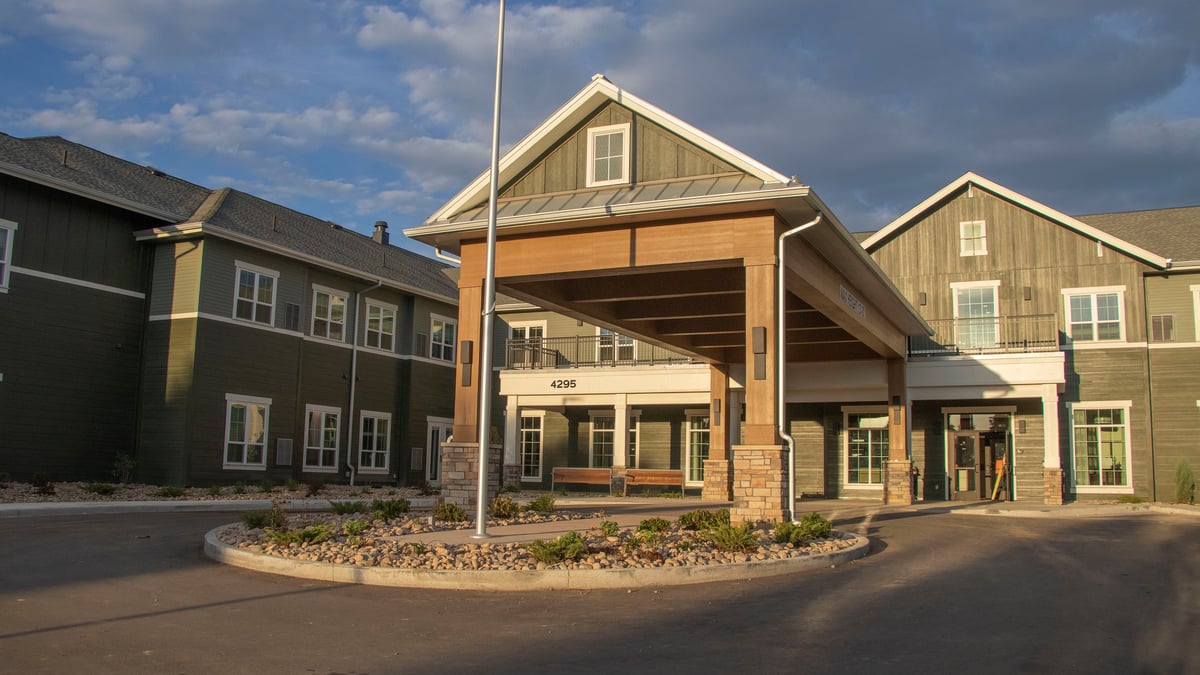
For families in Loveland, Colorado, Stoneridge At Centerra offers Assisted Living and Memory Care in a setting designed around personalized support, comfortable apartment homes, dining, and opportunities for connection.
Understanding the Difference Between Assisted Living and Nursing Home Care
The biggest difference between assisted living and nursing home care is the type and intensity of support provided. Assisted living is for older adults who need help with Activities of Daily Living (ADLs) but do not require ongoing skilled nursing services.
At Stoneridge At Centerra, Assisted Living associates can provide support with everyday needs such as:
- Bathing and dressing
- Medication management and daily reminders
- Continence support and other daily routines
Nursing homes, also called skilled nursing communities in some contexts, generally serve people who need more intensive medical or rehabilitative support. This may include individuals recovering from a serious illness or surgery or those managing complex health conditions.
Understanding this distinction is important when comparing senior community options. Assisted living focuses on combining personalized daily support with community life, while skilled nursing centers more heavily on medical needs and rehabilitation.
Daily Life in Assisted Living vs. Nursing Home Care
Daily life is another important consideration when comparing assisted living vs. nursing home care. In assisted living, residents typically have their own apartment homes and can personalize their surroundings with familiar furniture, photographs, and belongings.
At Stoneridge, daily life extends well beyond the apartment home. Residents can enjoy restaurant-style meals through Elevate® Dining, participate in the Vibrant Life® program, spend time in outdoor courtyards and gardens, or gather with neighbors in welcoming common spaces. Scheduled transportation and housekeeping also help simplify everyday routines.
Skilled nursing environments operate differently because daily schedules often need to accommodate medical treatment, rehabilitation, and clinical oversight. For someone whose primary need is help with everyday routines rather than intensive medical services, assisted living may provide a more lifestyle-focused alternative.
Comparing Services and Support
Looking closely at what each option provides can help families determine which setting aligns with a loved one’s needs. Assisted living commonly combines personal support with services that make daily life more convenient.
At Stoneridge, residents can benefit from:
- Personalized assistance with daily routines and medication management
- Elevate® Dining, housekeeping, and scheduled transportation
- Vibrant Life® programs, social events, and inviting indoor and outdoor spaces
The community also offers a range of apartment home floor plans, along with amenities such as a bistro, courtyard, movie theater, fitness center, outdoor garden, dog park, and professional salon and barbershop.
Skilled nursing, by comparison, is intended for people whose needs require more intensive professional services. Depending on the setting and individual situation, that may include rehabilitation therapies, wound management, or ongoing skilled nursing oversight.
Choosing Senior Care for Parents
When choosing senior care for parents, start by considering what kind of support is needed today rather than choosing solely by the name of a care setting. Mobility, medication needs, personal routines, cognitive changes, and opportunities for social connection can all influence the decision.
Questions worth discussing with family members and healthcare providers include:
- Does your loved one mainly need assistance with everyday personal routines?
- Are complex medical services or rehabilitation the primary need?
- Would regular dining, programs, outings, and social connection improve daily life?
If assistance with bathing, dressing, medications, and other daily routines is the primary concern, assisted living may be appropriate. If ongoing skilled medical oversight is necessary, a nursing home or skilled nursing setting may be a better match.
For someone living with Alzheimer’s disease or another form of dementia, specialized memory care may also be worth considering. Stoneridge offers Memory Care with person-centered programs designed around individual strengths, familiar routines, and meaningful engagement.
Exploring Alternatives to Nursing Homes
Families researching alternatives to nursing homes may find that assisted living offers a different balance of daily support, privacy, and community connection when skilled nursing is not required.
Rather than centering the day around medical treatment, assisted living can provide help with daily routines while giving residents opportunities to enjoy meals with neighbors, participate in programs, spend time outdoors, and make their apartment home their own.
The right choice ultimately depends on the individual. Talking with healthcare providers and touring potential communities can help families understand what level of support fits current needs and what options may be available if those needs change.
Schedule a personal tour of Stoneridge At Centerra to explore Assisted Living and Memory Care, meet the associates, and see which option may be the right fit for you or your family member.